

The global power quality and grid-connected equipment industry is advancing rapidly, driven by continuous technological and business model innovation. In 2025, the penetration of wide-bandgap semiconductors (SiC, GaN) in grid-connected converters reached 22%, doubling the 2021 level. Meanwhile, 34% of industry providers have transformed from standalone equipment sales to integrated “monitoring, treatment, operation and maintenance” services. The pay-as-you-go Power Quality as a Service (PQaaS) model has grown fastest in North American data centers, with average contract terms extended to over five years.
Global trade and supply chain patterns are continually evolving. In 2025, the total import and export value of grid-connected and power quality products reached USD 24 billion. China leads global exports with a 38% market share, focusing on medium and low-voltage equipment supplied to Southeast Asia, the Middle East and Africa. Germany and Japan retain competitive edges in high-end active power filters and ultra-high voltage SVG solutions. Due to exchange rate volatility and geopolitical trade barriers, supply chains are becoming more regionalized, with newly operational local production capacity in Mexico and Eastern Europe surpassing USD 1.5 billion in 2025.
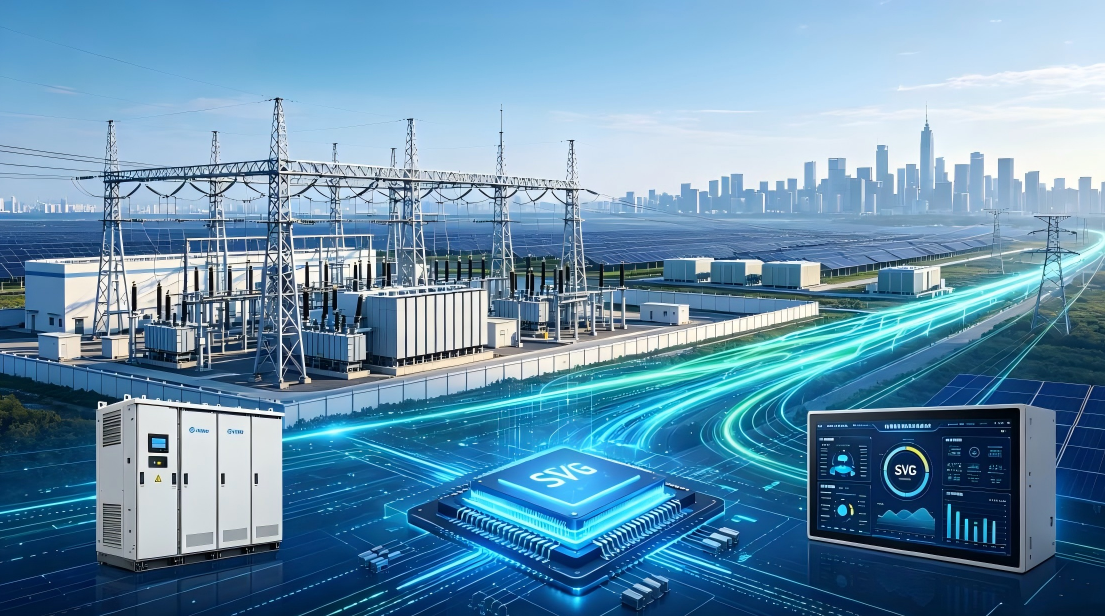
From 2026 to 2030, the industry is expected to accumulate over USD 300 billion in new market opportunities. Global grid-tied inverter shipments will rise from 280 GW in 2025 to 520 GW by 2030, with power quality control equipment maintaining a steady annual compound growth rate of 10.3%. The proportion of dynamic reactive power compensation devices and energy storage power quality kits will increase from 29% to 41%. Leading patent innovations concentrate on multi-level topology optimization, virtual inertia response control, and chip-integrated sensing technology.
Highly penetrated distributed energy resources and emerging grid scenarios including hydrogen energy and carbon capture are further expanding industry technical boundaries. The sector is shifting from passive power quality remediation to proactive grid support.