

We specialize in the R&D, design and manufacturing of hardware and software products for power safety, energy saving, power distribution and smart energy.
Categories
Popular Products
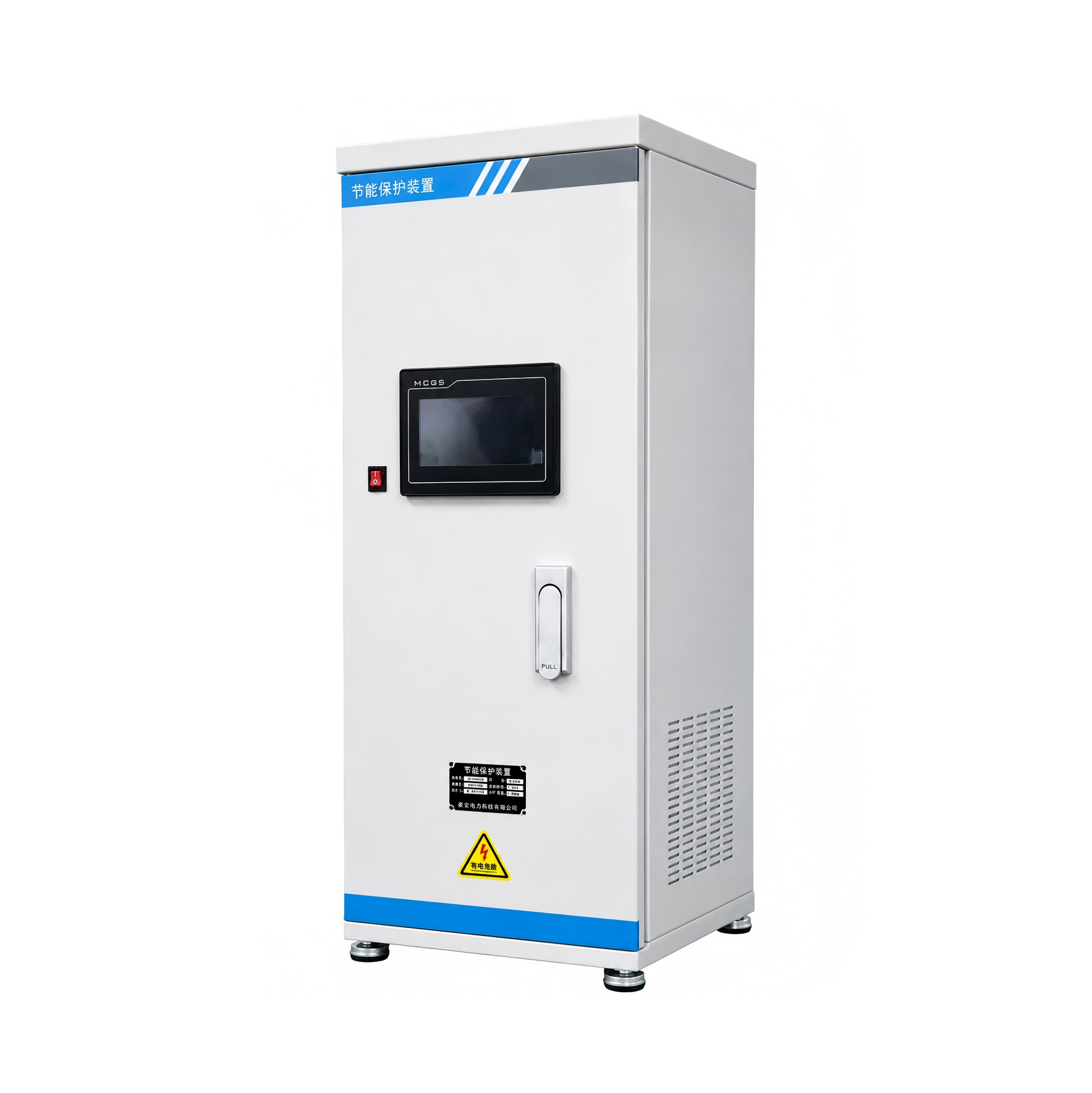
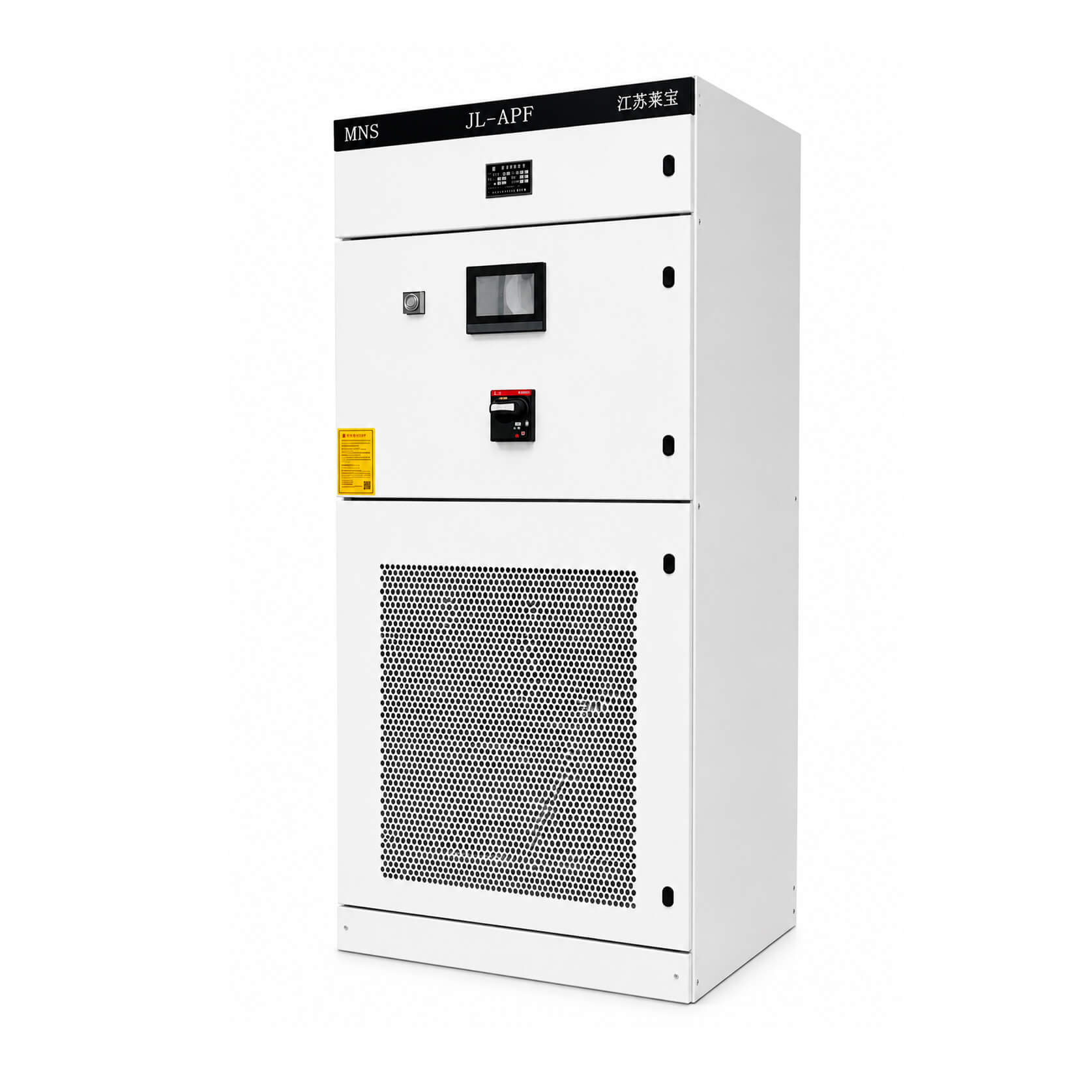
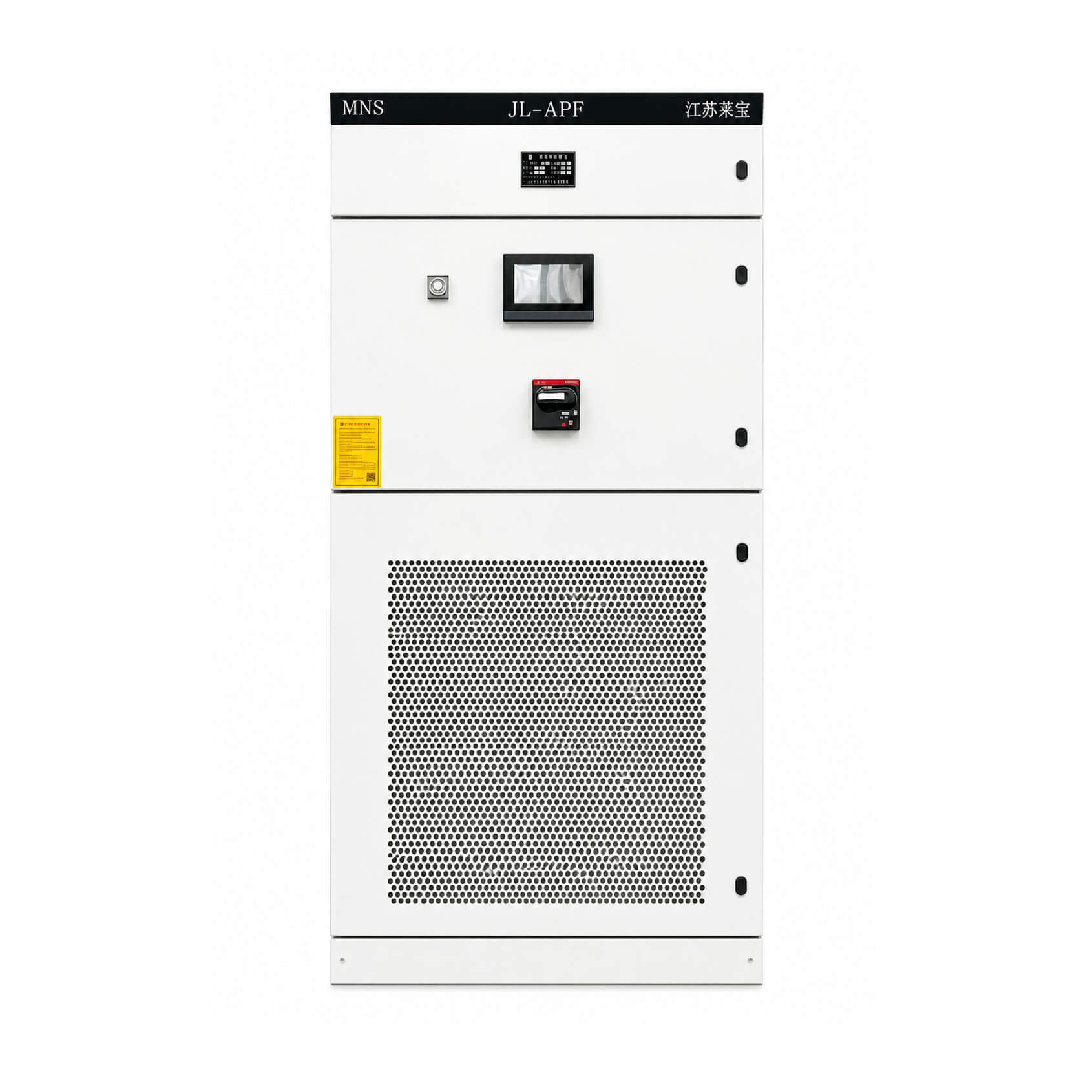
JL-APF Series Active Harmonic Filter System
The JL-APF series active power filter is available in wall-mounted and rack-mounted configurations, consisting of a 7-inch monitoring interface and APF modules. The 7-inch human-machine interface (HMI) allows for system configuration and data inquiry, supporting both local and remote operational control.
Product Overview
The JL-APF series active power filter is available in wall-mounted and rack-mounted configurations, consisting of a 7-inch monitoring interface and APF modules. The 7-inch human-machine interface (HMI) allows for system configuration and data inquiry, supporting both local and remote operational control.
The APF utilizes external current transformers to monitor load current in real-time. Through internal DSP processing, it extracts the harmonic components of the load current and generates PWM signals to drive the internal IGBTs. The inverter then injects a compensating harmonic current—equal in magnitude but opposite in phase to the load's harmonic current—into the grid to achieve effective filtering.
JL-APF units can simultaneously address various common power quality issues in distribution networks, such as poor power factor, current imbalance, voltage flicker, current harmonics, and overvoltage conditions. This improves power supply quality, ensures the safe operation of user equipment, and enhances energy efficiency.
Performance Features
As an active filtering product, the JL-APF module and device offer functions such as harmonic filtering, resonance suppression, dynamic compensation, power quality optimization, and energy conservation. Featuring a modular design, the product supports both cabinet-based assembly and wall-mounted installation; it is compact, space-efficient, and easy to install and operate. The JL-APF active power filter module and device can filter harmonics in three-phase three-wire and three-phase four-wire power grids. Installed in parallel on the power distribution system busbar or adjacent to electrical equipment, it filters harmonics ranging from the 2nd to the 50th order, achieving a harmonic filtering rate of over 95%.
Active filtering functions: Automatically tracks and eliminates grid harmonics in real-time, enhances equipment safety, and reduces equipment losses; complies with national standards, offering controllability and rapid response capabilities.
Technical Parameters
| Rated operating voltage | AC 380V ±20%; |
| Operating frequency | 50Hz ±5%; |
| Overload capacity | 1.2 times rated capacity for 1 minute; |
| Switching frequency | 20kHz; |
| Total response time | <10ms; |
| Power loss | ≤2.5%; |
| Noise level | ≤60dB; |
| Communication | Two RS‑485 communication interfaces (supports GPRS/Wi‑Fi wireless communication); |
| Unbalance compensation | With sufficient capacity, the post‑compensation current unbalance rate is less than 3%; |
| Filtering performance | Filters 2nd–50th order harmonics; with sufficient capacity, the compensation rate meets or exceeds the requirements of GB/T 14549‑1993; |
| MTBF (Mean Time Between Failures) | ≥100,000 hours. |
Technical Advantages
① Current detection technology based on instantaneous reactive power theory enables rapid and accurate detection of harmonic currents; dynamic harmonic current compensation is achieved through optimized Pulse Width Modulation (PWM) control; direct current control maximizes the filter's compensation performance while preventing overload;
② Intelligent DSP Control: A high-speed 32-bit DSP chip serves as the core of the control unit, ensuring precise and effective harmonic detection and compensation control; features include intelligent monitoring, flexible operation, clear display of operating parameters and status, and automatic fault diagnosis; communication interfaces can be expanded to enable remote computer monitoring;
③ High-Frequency Converter: A full-bridge PWM converter generates the compensation current; the main circuit utilizes IGBT power units operating at high frequencies, resulting in a compact, highly efficient, and reliable converter.
Environmental Conditions
① Altitude: Below 1,500 meters;
② Ambient temperature: -20°C to +50°C;
③ Relative humidity: Monthly average maximum relative humidity of 90% (with a monthly average minimum temperature of 25°C) without surface condensation;
④ Installation site must be free from hazardous substances such as flammable, explosive, or corrosive gases and liquids; seismic intensity: below Level 6;
⑤ Pollution level: Below Level III.
Note: Customization is available for other special applications or environmental conditions.
More Products
Get a Free Quote
Feel free to contact us —
we strive to earn your trust.